
Kintsugi
the meaning of scars

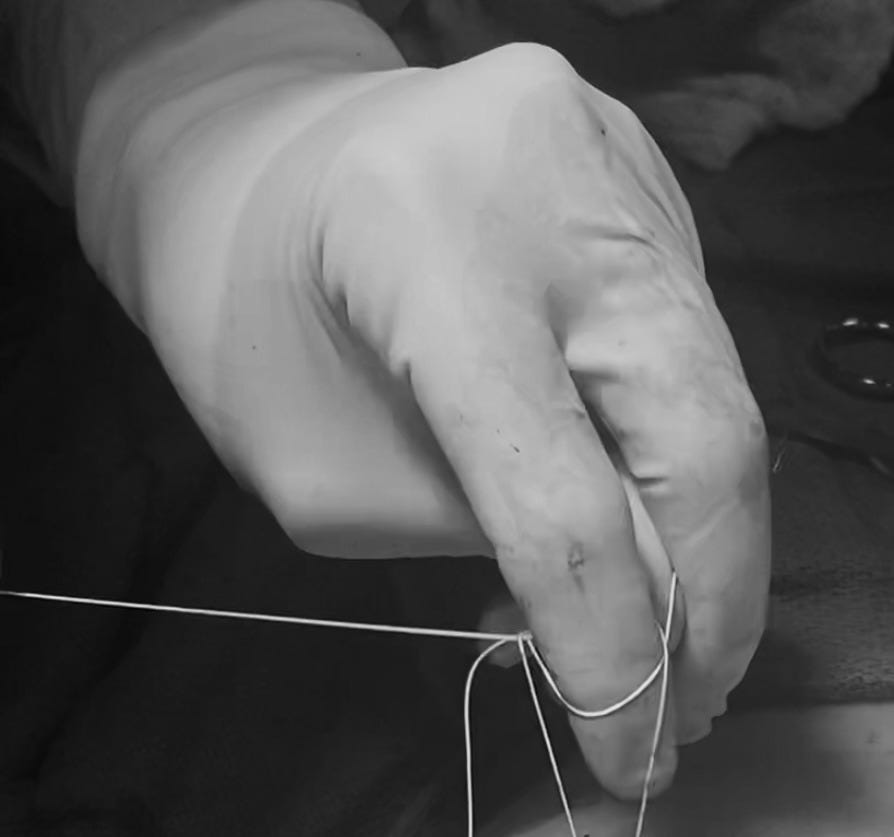
I have a few scars on my body. One is the scar left from an appendectomy in 2002. Although this was an emergency surgery performed in the middle of the night, the scar from it never bothered me. It’s always reminded me instead of the very kind general surgeon who came into the hospital at 3 am during a snowstorm to care for me. The other scar which came a few years later is the mark that shows where my son was brought forth from my body. It’s faded substantially over the years, but I’ve never considered having it removed either. It’s both a reminder of the most cherished event of my life, as well as a testament to the power of the human body. (That little bundle of joy is now a big hairy teenager who likes to practice his tae kwon do air kicks near my head. Emotional scars.)
Along the line of air kicks, I feel the need to mention one of my favorites series of movies, Kung Fu Panda, which is a brilliant blend of both eternal wisdom and utter silliness. In the second installment, Po the kung fu panda confronts the evil peacock Shen about his parental trauma:
Po (the kung fu panda): “See that’s the thing, Shen, scars heal.”
Shen (the evil peacock): “No, they don’t…wounds heal.”
Po: “Oh, yeah…what do scars do? They fade, I guess…”
Shen: “I don’t care what scars do!”
Without giving too much credit to evil peacocks who hide long knives in their plumes, I have to concede that Shen was right - wounds do heal, but the scars they leave behind are left to slowly fade, or quietly linger on, as the case may be.
Enter kintsugi, the Japanese art of repairing broken pottery by filling the cracks with lacquer dusted with gold, silver, or platinum. The result is a unique object with visible seams that celebrates the item’s flaws. It’s a metaphor for resilience, demonstrating that breaks and repairs make an object stronger and more unique. While the wound of broken pottery has been healed, the scar is highlighted rather than hidden.
What is it then that makes our own physical scars so undesirable? In some cases, such as following breast reconstruction, the scars can be a reminder of the trauma of the initial diagnosis and surgery. Following even aesthetic surgery, one of the most common questions I receive relates to the scar and how soon it can be treated with lasers, microneedling, or other modalities. Without attempting to make any judgments on these requests, I often sense an impatience to cover the secret of their surgery, as well as the reasons for it. While I certainly do provide all patients with a scar balm after surgery and perform scar treatments as needed, I’ve observed over the years that the patients most satisfied with their results don’t seem to notice their scars at all. What they do mention is how they feel about themselves, which has very little to do with the physical remnants themselves.
But all physical scars ultimately tell a story - their color, length, depth, and texture - reveal the nature of the injury as well as the health of the underlying body. My work with the Weill Cornell Center for Human Rights (WCCHR) involves performing physical examinations of asylum seekers who have very often been tortured. Part of the claim involves documentation in the form of a physical examination, and their scars play a large part in that documentation. Each scar is carefully photographed, described, and explained in the affidavit which is submitted with the claim. These scars help to support the testimony of the asylum seekers and speak more than their words alone.
I’m at a stage in my career where much of what I see in my field has started to bewilder me - from the desire to make everything unnaturally high, tight, plumped, and bizarrely uniform, to blatant price gouging and a desire for celebrity status by some plastic surgeons. Perhaps it’s time to slow down and celebrate the kintsugi of the body - one that celebrates its imperfections, breaks, and healing as a natural part of its life which ultimately make it even more beautiful.